
At a glance
- −15%laundry costs: from €1,779 to €1,509 a month
- 238 → 48croissants thrown away per month (−80%)
- over €5,000saved per year
- 6.5 h → about 1 hof the manager’s time per week on the schedule, hours and payroll
- −35%unplanned overtime
- 0after-the-fact pay corrections (previously 2-4 a month)
- −4%total hours worked
- Hotel
- independent 2-star hotel
- Rooms
- 22: single, double, twin and quadruple
- Location
- Fontainebleau, 140 m from the château
- Departments
- 24/7 front desk, housekeeping, daily breakfast buffet
About the hotel
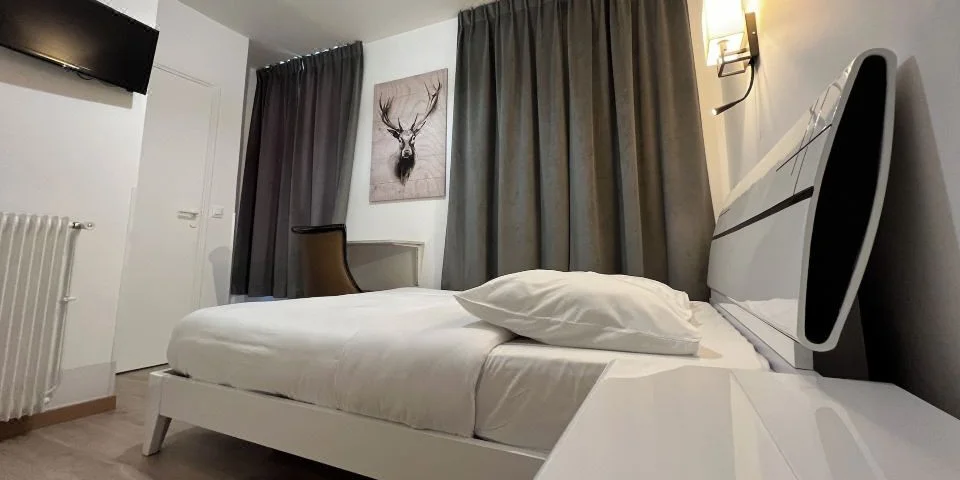
Hotel Belle Fontainebleau sits on rue de la Chancellerie, about 140 m from the Château de Fontainebleau and a few minutes’ walk from the forest. It has 22 rooms, from singles to family rooms for four, and a breakfast buffet is served every day. Guests come for the château and the forest, many for the weekend. Families book twin and quadruple rooms, and dogs are welcome.
The challenge
Monday morning in high season. At 9:00 Sofia, the manager, is copying last week’s hours from the written-out schedule and the corrections in WhatsApp messages into the payroll file, trying to work out who stayed late on Saturday and by how much. One floor up, a housekeeper is preparing four beds in a family room for a couple arriving at 15:00: in the PMS she saw that the whole room had to be prepared, with no way of seeing how many guests were actually coming. At 10:30, 20 croissants go in the bin, ordered in exactly the same quantity as the day before despite 30% fewer guests.
Nobody was doing a bad job: occupancy changed every day, but the schedule, the linen and the breakfast order stayed the same, because nobody imagined the work could look any different. It showed most clearly in the laundry: about €337 a month went on rented bed linen and towels for beds nobody slept in.
“I knew how much I was paying for linen. But I had no idea how many sheets were going to the laundry that nobody had slept in and that were perfectly clean.”
Why KalendGO
Anthony Danhache, the owner, set three conditions:
- The app has to be easy and practical for the team. Anthony had tried other apps in the past, but they were too impractical for using them to improve the team’s productivity.
- Getting started has to take less than an hour, and training the staff less than 15 minutes.
- The app has to bring real savings and make the hotel run more efficiently.
Help from the KalendGO team in setting up the account, an intuitive video showing staff how to use the app, and the specialisation in hotels were the key things that made Anthony decide to use KalendGO.
“Based on my experience with other apps, I would never have thought it could be this simple.”
The team’s and the manager’s time
Building the schedule had always been a challenge, between leave, the booking calendar and sharing shifts out fairly between staff. KalendGO’s scheduling algorithm solved all of those problems. Cover and leave requests are in the same place. The team gets notifications of schedule changes on WhatsApp, which put an end to the late arrivals and absences that had been repeating month after month. Working time records come from location pins sent on WhatsApp and summarised in the app, instead of being copied from paper attendance sheets. Sofia got back over 5 hours a week:
- building the schedule: from 2.5 h to 10 min,
- changes, swaps, leave and schedule questions: from 1.5 h to 15 min,
- copying and checking hours: from 1 h 15 min to 10 min,
- variables for the payroll office: from 1 h 15 min to 10 min.
In total, from 6.5 h to about 1 h a week, or about 23.5 h less per month.
“I do the schedule on Thursday in 10-15 minutes. It used to take me a whole evening.”
Pay: actual working time and fair settlements
Employees record the start and end of their work on their phones, using the mobile app or WhatsApp. Sofia approves the hours worked every week, so she sees as she goes how actual working time differs from what was planned. Leaving early for personal reasons, arriving late or having to extend a shift no longer gets lost in the monthly settlement: every case is taken into account when the hours actually worked are established.
Unplanned overtime fell from 40 to 26 hours a month (−35%). After-the-fact pay corrections went from 2-4 a month to zero. Settlements are more accurate, staff are paid for the time they actually worked, and the manager has fewer surprises at the end of the month.
“I used to find out about overtime at the end of the month. Now I can see the hours worked as we go.”
Laundry and breakfast
Every housekeeping task in KalendGO is created from a booking and shows how many guests are sleeping in the room. When a twin or quadruple room is booked for two, the housekeeper makes up two beds and puts out two sets of towels instead of four. Linen rental costs fell from €1,779 to €1,509 a month (−15%). The hotel keeps the rest on purpose: a guest who asks for an extra bed at 22:00 still gets one.
For breakfast, every evening Sofia checks in KalendGO how many croissants and pains au chocolat were enough in the past for the number of guests planned for the next day, instead of always assuming 2 per person. The cost of food thrown away fell from 18% to 7% of total spending, saving €163 a month. Croissants and pains au chocolat in the bin now average 48 a month instead of 238.
“Now I can see on my phone, with no doubt, how many guests are in the room, and I always know how many beds, sets of towels and minibar drinks to prepare.”

What’s next
Next step: the KalendGO team is now working with Anthony on extending the monthly reports with the exact amount of linen sent to the laundry. That will let him compare the data with the laundry’s invoices and clear up billing differences faster.
Overall result
- over €5,000saved per year on laundry, breakfasts and labour costs
- over 5 h a weekless of the manager’s time spent on the schedule and hours. She now spends that time on guests and the team.
“I pay for every hour worked. Now I know exactly which ones.”